Kambi Q2 2026 Results — AI Lifts Profit
Kambi doubled adjusted EBITA as World Cup turnover, AI pricing, steady costs, and partner growth supported stronger margins and improved 2026 guidance.

The Kambi Q2 2026 results showed how revenue growth, steady expenses, and AI-supported sportsbook pricing combined to lift profitability during the FIFA World Cup. The tournament delivered the strongest evidence yet that Kambi’s technology can manage greater betting volume and product complexity at scale.
Revenue growth carried through to profit
Second-quarter revenue increased 13% from a year earlier to €45.9 million, despite credits issued for technical downtime in April. Adjusted EBITA reached €7.6 million, more than twice the €3.7 million recorded in the comparable period of 2025.
Operating expenses were nearly unchanged at €31.5 million, compared with €31.7 million one year earlier. That cost stability allowed more of the additional revenue to reach operating profit after several years of investment in AI development.
Kambi revised its adjusted EBITA definition to remove foreign-exchange revaluation effects, which management said provides a clearer view of underlying operations. During the quarter, the company also completed 14 partner launches.
Following the report, Kambi shares rose 10.21% to a reported $165.6. That placed the stock closer to its 52-week high of $176.66.
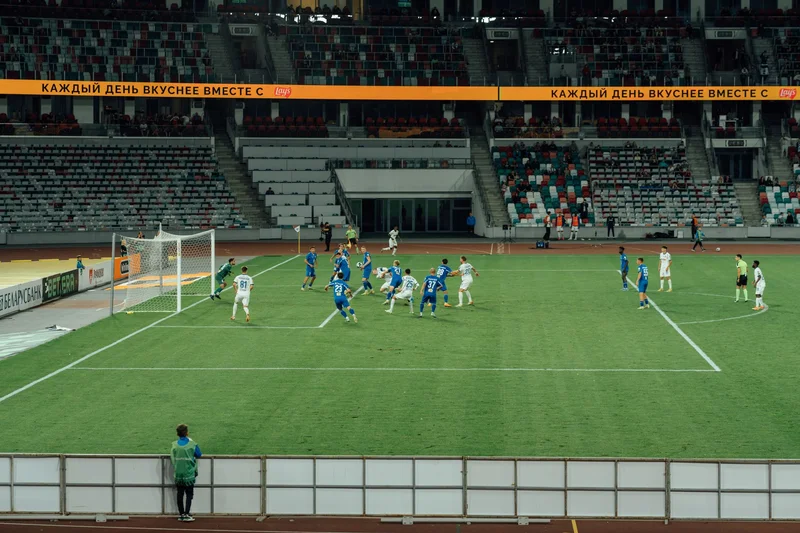
More than €1 billion in Turnkey Sportsbook turnover tested Kambi’s platform during the tournament.
The World Cup tested the platform at scale
World Cup activity defined the quarter. Kambi processed more than €1 billion of tournament turnover through its Turnkey Sportsbook and delivered an 18% operator trading margin. Its AI system handled over 75% of wagers while supporting a larger selection of markets and betting combinations.
Average operator turnover per match was 20% higher than during the 2022 tournament. Bet Builder’s share of all wagers rose from 3% four years earlier to 35% in 2026, reflecting both new product capacity and stronger demand for combined selections.
Latin America generated 46% of World Cup turnover. The presentation’s cumulative margin data showed the operator trading margin beginning near 5% and settling around 17% to 18% by the tournament’s final matches.
The final alone offered 1 million distinct wagering combinations. Bet Builder accounted for 22% of live wagers, versus 3% in 2022. Kambi linked that expansion to real-time AI pricing, high acceptance rates, and downtime that remained close to zero during the tournament.
These figures matter because the event placed unusual pressure on pricing breadth and system capacity. The remaining question is whether the higher margin can persist when the sporting calendar returns to more typical conditions.
Kambi’s AI system now covers five major sports
Kambi has developed its automated pricing technology since 2022. It is now fully active across soccer, basketball, tennis, baseball, and ice hockey, with more than three-quarters of bets processed through the system.
American football is next on the roadmap, beginning with NFL testing. Kambi also plans to extend the technology to esports, table tennis, and volleyball over the coming months.
Management describes the model as a reinforcing cycle. Roughly 70 partners contribute to €17 billion in worldwide liquidity and billions of annual wagers. That activity produces data for Kambi’s models, which can then support more precise odds, broader offerings, and additional combinations. The intended commercial result is better margins, reduced risk, and stronger partner satisfaction.
The company said regulated jurisdictions account for 99% of its betting volume. In management’s view, this provides cleaner training data than volume sourced from gray markets.
Margin improvement had several contributors
The Kambi Q2 2026 results were not driven by one factor alone. Better operator trading margins added approximately €3.8 million to the year-over-year EBITA improvement, while major soccer tournaments contributed €3.6 million.
New partners launched during 2026 added €2.6 million, and operator migrations supplied another €2.8 million. Gaming-tax benefits and other items contributed €3.8 million, while favorable currency movements added €0.5 million.
Those gains were partly offset by a €1.5 million rise in cost of sales and a €0.2 million increase in operating expenses. The limited growth in expenses relative to revenue supported management’s case that the platform can scale efficiently.
The Turnkey Turnover Index also continued its recovery. It rose from roughly 320 in the fourth quarter of 2023 to approximately 690 in the second quarter of 2026. Over the same broader period, operator trading margins advanced from about 8% to a record 14.0%. Kambi attributed the expansion to improved AI pricing and a greater proportion of higher-margin products, including Bet Builder.
Cash generation supported investment and repurchases
Kambi produced €6.5 million in operating profit and received a €3.5 million benefit from working-capital movements. The company then paid €4.0 million in taxes and spent €3.5 million repurchasing shares, leaving closing cash of approximately €32 million.
Management expects buybacks to remain its main capital-allocation method. It does not plan to introduce a dividend in the near term. CFO David Kenyon said the balance sheet and cash generation can support continued technology investment alongside those repurchases.
April’s downtime remains an important counterpoint to the quarter’s progress. Management acknowledged that the disruption illustrates the execution risk attached to operating sportsbook infrastructure, even when broader financial and tournament performance is strong.

Stable expenses allowed more of Kambi’s revenue growth to reach operating profit.
Commercial growth extended beyond Turnkey Sportsbook
Partnership activity increased across North America, Latin America, and Europe. Atlantic Lottery and British Columbia Lottery Corporation selected Kambi technology for use across multiple Canadian jurisdictions. The Canadian Bank Note Company added another route into regulated markets, while Pure Casino Entertainment signed a Turnkey agreement that expands Kambi’s presence in tribal gaming.
Rush Street Interactive went live with Kambi on the opening day of Alberta’s market in the third quarter. In Spain and Peru, RETABET agreed to use Odds Feed+, Kambi’s modular pricing product.
Management said Odds Feed+ is expanding faster than the full Turnkey business. The company connected that growth to operators outsourcing difficult pricing and trading functions while retaining their own customer-facing products.
Kambi also secured its first Player Account Management agreement through 4 Bears Casino & Lodge in North Dakota. The deal adds a potential revenue source outside the company’s core sportsbook offering.
Higher guidance still assumes margins normalize
Kambi increased its 2026 adjusted EBITA forecast to €23 million–€27 million, up from the previous €20 million–€25 million range. Management identified stronger-than-expected World Cup performance as the main reason for the revision.
The company nevertheless expects operator trading margins to move toward 11% during the rest of the year as major tournament activity declines. It anticipates a seasonally quieter third quarter followed by a stronger fourth quarter.
NFL testing could be significant because American football represents Kambi’s largest market by betting volume. Management believes experience across soccer, basketball, and other sports can transfer to the new deployment, while recognizing that American football presents additional complexity.
Kambi is also monitoring U.S. regulation of prediction markets as it considers partnerships, internal development, or an acquisition. The presentation referenced court decisions expected in early 2025, although that date predates this July 2026 report.
CEO Werner Becher characterized the quarter and subsequent weeks as an unusually strong business period. He credited the AI system with allowing Kambi and its partners to expand player propositions and combination options for sports bettors.
The quarter strengthened Kambi’s argument that automated pricing can improve product breadth without matching revenue growth with equivalent expense growth. World Cup performance provided the clearest test so far, but normalized margins, new-sport deployment, and reliable execution will determine how much of that advantage carries forward.
Worth the read?