Meta Deepfake Labels Narrow The Removal Backstop
Meta is shifting deepfake governance toward labels, but federal removal duties and platform-risk workflows still need active controls.
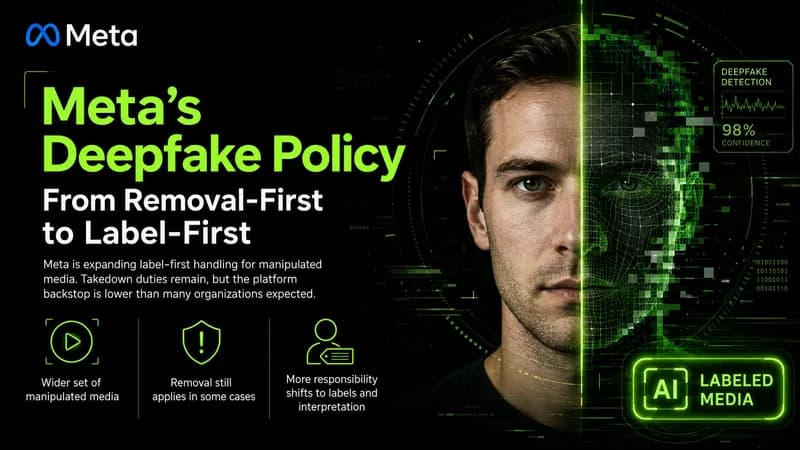
Meta's deepfake policy is moving from removal-first to label-first for a wider set of manipulated media. That change does not eliminate takedown duties, but it does lower the platform backstop many organizations assumed would stay in place.
May Is The Labeling Change
In May 2026, Meta plans to begin mandatory labeling for AI-generated material on Facebook and Instagram. The operational question is whether those labels remain visible and consistent after content is shared, reposted, or viewed away from its original context.
Monika Bickert, Meta's vice president for content policy, announced the shift, and BankInfoSecurity covered it. Meta's position is that transparency can address manipulated media while preserving more expression than a broad removal rule.
That is a governance choice. It shifts more responsibility onto user interpretation, platform detection quality, and downstream moderation teams.
July Is The Removal Change
The larger shift arrives in July 2026. At that point, deepfake status alone will no longer be enough for removal under Meta's standalone manipulated-media policy.
A separate Community Standard can still support takedown. Voter interference is one example. Other prohibited conduct can also keep a removal path open.
The key point is narrower enforcement. Under Meta's standalone manipulated-media rule, deepfake status by itself carries less takedown force.
Federal Duties Still Sit Above Platform Policy
Meta cannot use an internal rule to displace federal requirements. The Take It Down Act still sets a 48-hour takedown clock for covered nonconsensual intimate imagery, including synthetic versions.
That means content teams need to separate three categories: labeled material that remains online, material removed under Meta rules, and material that has to come down because law requires it.
Confusing those categories creates operational risk. The headline is not that deepfake removal is finished. The accurate read is that automatic removal has narrowed.
The Risk Backstop Is Weaker After July
Organizations that treated Meta enforcement as part of their deepfake risk strategy need to revisit that assumption. After July, the platform may leave more manipulated media online unless another policy or legal trigger applies.
That affects escalation paths, evidence handling, legal review, crisis communications, and monitoring around impersonation risk. The process has to account for content that is labeled but not removed.
Labels Do Not Resolve Every Governance Question
Meta is choosing transparency over takedown for a wider category of deepfakes. Regulators may not treat that as enough in every jurisdiction, especially where federal removal duties or EU platform rules create a higher standard.
The practical takeaway is straightforward. Labels may inform users, but they do not replace a removal workflow when the law or another platform rule requires action.
Worth the read?