American Airlines Profit Gap Tests Its Premium Push
American Airlines is investing in premium cabins, lounges, reliability, loyalty, and new aircraft as it works to narrow a multibillion-dollar profit gap.
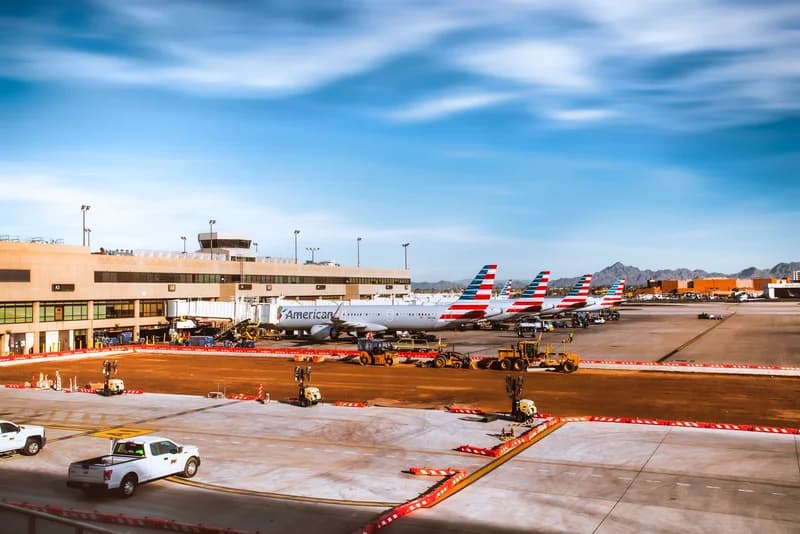
The American Airlines profit gap now sits at the center of Robert Isom’s agenda. The carrier has North America’s broadest footprint, yet its earnings remain billions of dollars behind those of its closest large U.S. competitors.
American expects to operate roughly 6,500 flights each day this year. Cirium estimates that its schedule exceeds the nearest competitor’s by almost the entire operation of Alaska Airlines. That scale has not produced comparable profit. Last year, United Airlines earned about $3 billion more than American, and Delta Air Lines earned nearly $5 billion more.
Isom describes American as a global premium carrier with the continent’s largest network. His longer-term goal includes reducing the margin deficit, though he has not set a timetable. The strategy covers upgraded cabins and lounges, expanded international service, loyalty growth, operational improvements, and a potential wide-body purchase.
A larger schedule still needs stronger revenue
American has developed an efficient operation, but management must now improve the revenue generated by that operation. Chief Financial Officer Devon May said the company will judge progress by its ability to reduce both the total revenue difference and the deficit measured per unit.
Management expects four areas to contribute:
Expanding loyalty membership and credit card relationships
Improving the passenger experience
Strengthening the route network
Increasing revenue from higher-end products
The current analyst consensus puts adjusted earnings at 64 cents per share for this year. That would represent an increase of almost 80% from last year. American plans to revise its outlook when it announces second-quarter results on Thursday. Analysts are more optimistic about the following year, when they expect adjusted earnings to reach $2.58 per share, roughly four times the current-year estimate.
Conditions across the airline industry remain mixed. Delta and United recently said reservations continue to hold up. A rapid fuel-price increase tied to the Iran war surprised carriers, although airlines have transferred more of the added expense to passengers. Executives across the industry see little room for a substantial near-term decline in fares.
Healthy demand does not eliminate American’s central problem. The airline must convince more customers to purchase expensive seats and additional services. Delta and United began concentrating on that market years earlier.
Premium cabins offer the most direct revenue opportunity
American is updating aircraft already in service while receiving new planes with redesigned interiors, added amenities, and larger premium sections. The airline has joined other carriers in installing satellite internet from SpaceX’s Starlink. Management is also evaluating whether to restore seatback entertainment across much of the narrow-body fleet, but it has not made a final decision.
Boeing 787-8 Dreamliners are next in line for interior updates. American could introduce remodeled cabins on its largest planes, the 777-300ERs, within the coming weeks. The potential revenue explains the priority. On certain international long-haul services, one lie-flat business seat can sell for nearly $10,000. A seat at the rear may bring in $2,000 or far less.
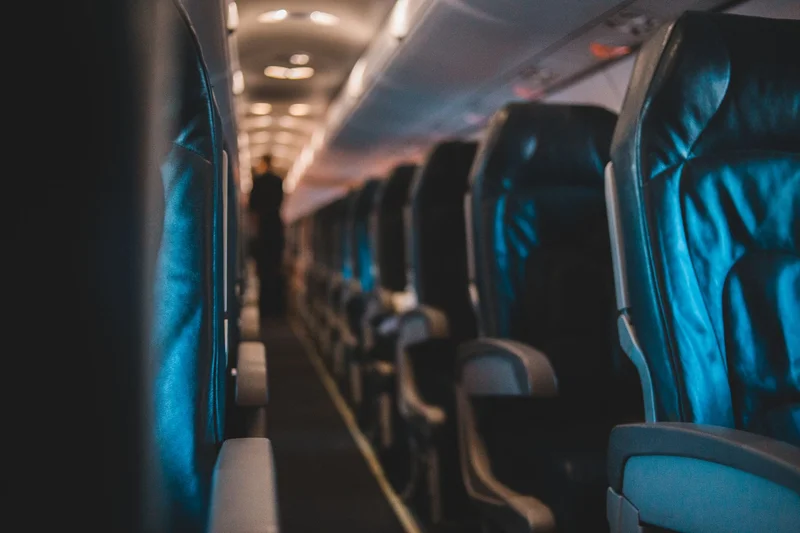
Premium seating is central to American’s effort to generate more revenue from each aircraft.
The revised 777-300ER configuration includes 70 Business Suites. Its arrival has raised concerns at the Association of Professional Flight Attendants. Union President Julie Hedrick argues that smaller crews could face heavier demands while American advertises more personalized premium service. In 2020, the airline changed staffing on those jets from 13 attendants to 11. Other airlines have made similar reductions.
The union’s concern is that better seats will not deliver a premium experience if service becomes slower or fails to meet customer expectations. American has also been retiring configurations with distinct first-class and business-class cabins.
The premium experience now extends through the airport
American is also investing in facilities on the ground. It intends to open a 37,000-square-foot Admirals Club in Terminal C at Dallas Fort Worth International Airport. According to Chief Customer Officer Heather Garboden, no other Admirals Club in the network will be larger.
Plans for the airport’s unfinished Terminal F include a grab-and-go Provisions lounge. American also expects to add Flagship check-in in Terminal D. These projects form part of a broader redevelopment at the airline’s largest hub. Dallas Fort Worth is receiving a $12 billion overhaul, while American has opened additional Terminal C gates before another expansion.
Major U.S. carriers have enlarged and improved lounges because customers buying premium travel have become an important profit source. American begins this competition from behind. United has worked on its higher-end offering for about a decade, and Delta’s experience stretches back almost 20 years.
Delta’s domestic first-class business illustrates the shift. During the late 2000s, around 90% of those seats went to frequent flyers as free upgrades. Delta now reports that most are purchased with money or redeemed miles. The approach has spread among large airlines, and American wants more passengers to pay for cabin upgrades.
Network breadth must translate into customer spending
American regards the scope of its route map as a major strength. Domestic service accounts for approximately 80% of its flying, leaving about 20% for international operations. Overseas routes often support higher premiums and typically use airplanes with more luxurious seating.
Performance outside American’s dominant hubs also matters. Chief Commercial Officer Nat Pieper singled out Los Angeles, Chicago, and Washington, D.C., as contested markets where no carrier automatically wins the customer. Credit card enrollment is growing in some of those areas and in New York.
United follows a different model. It operates more international flights than either American or Delta and has made unusual global destinations part of its identity, with additions spanning Mongolia and Galicia, Spain. American and other airlines often extend their reach through alliances and partnerships. United operates more of its geographic coverage directly.
Pieper assumed his current position last fall while American was recovering from an unsuccessful corporate sales approach introduced in 2024. He says demand is healthy across the company. American still has to turn that demand and its extensive schedule into stronger revenue for each unit of capacity.
Reliability supports the premium promise
Charging more requires an operation that customers can depend on. Cirium ranked American sixth for punctuality among 11 U.S. airlines during the year’s first half. American recorded a 76.6% on-time performance, while Delta and United occupied second and third place.
Isom and Chief Operating Officer David Seymour are addressing that result by distributing departures more evenly instead of packing connecting flights into disorderly waves at large hubs. The carrier is also applying artificial intelligence to identify possible maintenance issues before they occur.
Changes in customer perception could lag behind physical and operational improvements. Jay Barney, a strategic management professor at the University of Utah’s David Eccles School of Business, said changing a service culture is difficult but possible. He believes improvements must be conspicuous to current and prospective passengers. Barney also observed that travelers may have few alternatives when one airline dominates a hub.
American reports that customer satisfaction is increasing. Employees, however, have connected the company’s weaker overall performance with reduced profit-sharing. The Allied Pilots Association and the flight attendants’ union questioned Isom’s leadership earlier this year. The pilots’ organization represents 15,000 American aviators.
Dennis Tajer, a spokesman for the pilots’ union, characterized American as an enormous airline hindered by an unresolved weakness. His criticism reflects the mismatch between the company’s scale and the profit it produces.
Debt leaves less room for a rapid recovery
The balance sheet creates an additional constraint. American still owes $35 billion, although it has cut its debt from a post-pandemic high near $54 billion. Continuing to strengthen the balance sheet remains a major management priority.
Isom, 62, became chief executive in March 2022 after the pandemic had severely disrupted aviation. During the quarter in which he assumed the position, American posted a $1.6 billion loss. His earlier career included roles at Northwest Airlines and America West Airlines. Through later mergers, those companies became parts of today’s Delta and American, respectively.
Isom has said he approaches the company’s difficulties without illusions. He places the present recovery against an industry history that includes the September 11 attacks, a financial crisis, bankruptcies, mergers, wars, and disease. American’s current assignment is more specific: improve earnings while paying for aircraft, airport facilities, service, and technology.
Wide-body decisions will reach into the next decade
A new order for long-haul aircraft could become a central part of American’s next stage. Isom said the company may place an order this year and is considering proposals from Airbus and Boeing. American has not revealed how many planes it might buy.
The carrier has a fleet of more than 1,000 aircraft. Its 2025 annual filings show that this is the youngest fleet operated by any of the three largest U.S. airlines. An order for over 400 Airbus and Boeing narrow-body planes, placed roughly 15 years ago, helped produce that position. The long-haul fleet is older. Dozens of Boeing 777s have an average age exceeding two decades.
American intends to renovate the older 777-200s while evaluating replacement aircraft. Boeing currently supplies every wide-body plane in American’s fleet, but Isom believes Airbus could receive a meaningful share of the next order. Aircraft purchased now would probably enter the fleet during the early or middle years of the next decade.
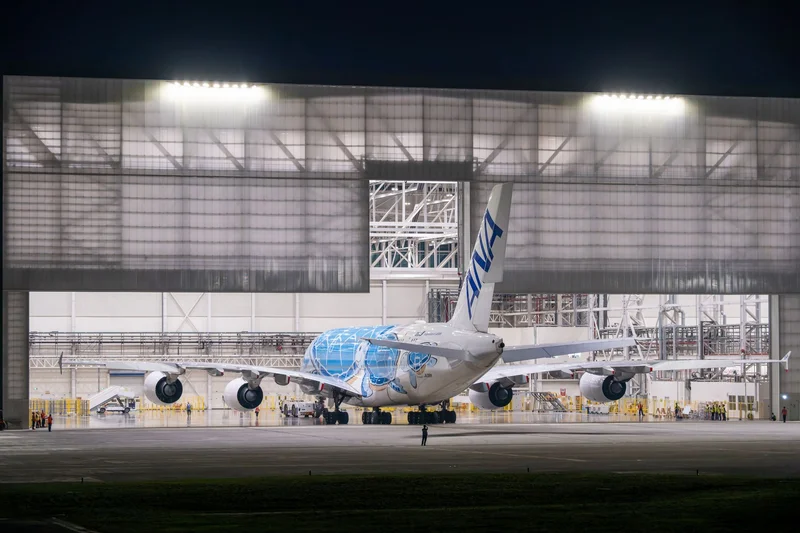
American is considering a new wide-body order as its older Boeing 777 fleet approaches replacement age.
Available production positions are part of the decision. Over the last four years, United has captured delivery slots covering more than 100 Boeing Dreamliners. Those commitments support United’s international expansion while American considers the future of its own long-distance fleet.
Management sees no practical route to a merger
United CEO Scott Kirby floated a combination with American this year, and American dismissed the proposal. Isom said conversations with advisers, political figures, and other interested parties found no plausible path for the transaction. He cited the law, the record of earlier airline mergers, and the absence of support.
American previously operated a substantial Northeast partnership with JetBlue. A court ended that arrangement in 2023 because of antitrust concerns. United now has a separate JetBlue partnership that could provide it with several slots at New York’s John F. Kennedy International Airport beginning as early as next year.
Kirby has repeatedly rejected the idea of buying JetBlue. He has also recognized that any combination with American would require willing management at American. Isom has said the carrier continues to watch for opportunities that could benefit customers, but his declared priority is the company’s own transformation.
Execution will determine whether the gap narrows
The American Airlines profit gap cannot be resolved by flight volume alone. Management is trying to generate more value from the network already in place by improving cabins, lounges, reliability, loyalty revenue, and international capacity.
Some measures are moving in the right direction. Analysts anticipate stronger earnings, American says satisfaction scores are improving, debt is below its post-pandemic peak, and new premium products are entering service. Even so, the distance from Delta and United remains considerable, and both competitors began developing their premium businesses earlier.
American has made its intended direction clear. What remains uncertain is whether those investments can change customer purchasing, improve the travel experience, and raise the profit generated by its extensive network.
Worth the read?