Intel Panther Lake Production Ramps Ahead of Earnings
ASML confirms Intel is scaling Panther Lake production on its 18A process, adding capacity before the company reports second-quarter results on July 23.
Intel Panther Lake production is accelerating as ASML’s most advanced lithography systems move into volume manufacturing, giving Intel more capacity to address client CPU demand before its July 23 earnings report.
ASML confirms a meaningful manufacturing milestone
ASML reported second-quarter 2026 results on July 15, exceeding Wall Street’s expectations and raising its full-year guidance. The update also included an important development for Intel’s manufacturing operation.
Intel Foundry is using ASML’s high-numerical-aperture extreme ultraviolet lithography equipment to manufacture Panther Lake processors at scale. The chips are built on Intel’s 18A process node and target the client computing market, including personal computers and laptops.
This matters because Intel struggled to supply enough client CPUs during the first quarter. Moving Panther Lake into high-volume production could reduce that constraint and improve Intel’s ability to serve existing demand.
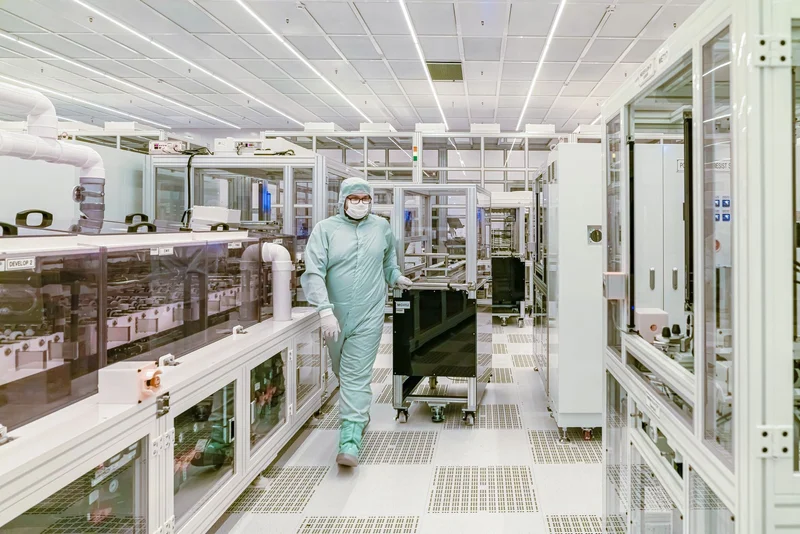
High-volume Panther Lake manufacturing could help Intel address constrained client CPU supply.
Panther Lake volume is rising sharply
Intel began shipping Panther Lake processors late last year. Management’s first-quarter commentary indicated that demand was solid, while production remained a limiting factor.
Intel CFO David Zinsner said Panther Lake volume in the second quarter would reach roughly six to seven times the first-quarter level. He also said the platform’s gross margin should improve sequentially each quarter.
The ASML announcement provides additional evidence that the planned expansion is underway. Intel Panther Lake production is no longer limited to an early launch phase. It has advanced into scaled manufacturing with equipment designed for increasingly complex semiconductor processes.
ASML also plans to work with Intel on further improvements to the 18A node. The collaboration is intended to support wider adoption of the process, which Intel is also using in its effort to become more competitive with AMD in server processors.
Client computing remains central to the quarter
Intel has projected second-quarter revenue of $14.3 billion and adjusted earnings of $0.20 per share. That revenue forecast represents 11% year-over-year growth. The earnings estimate would mark a clear improvement from the adjusted loss of $0.10 per share reported in the comparable period last year.
The Client Computing Group remains one of Intel’s largest operations. It generated $7.7 billion in first-quarter revenue, although sales increased only 1% from the prior year. A larger Panther Lake contribution could strengthen the segment if Intel converts its expanded output into shipments.
Capacity alone does not establish the final revenue result. Product availability, customer orders, manufacturing yields, and shipment timing still determine how much of the production increase reaches the income statement during a given quarter.
Guidance may carry more weight than the headline results
Analysts expect Intel’s third-quarter outlook to imply another 11% year-over-year revenue increase. The sharp rise in client CPU output creates the possibility of stronger guidance, provided demand and execution remain aligned with the production ramp.
Investors will therefore have more to evaluate on July 23 than the reported quarterly figures. Panther Lake shipment volume, progress on 18A manufacturing, client computing growth, and management’s forward expectations should offer a clearer view of whether the additional capacity is improving Intel’s operating trajectory.
Intel shares had already gained 141% in 2026 through the source publication date, reflecting optimism around the company’s product development and growth prospects. That advance also raises the standard for the coming report. Strong expectations can make guidance and execution details more consequential than a simple earnings beat.
The production update also connects two parts of Intel’s broader strategy. Panther Lake tests whether 18A can support a major client product at volume, while continued work with ASML is intended to improve the same process for wider adoption. The earnings report can clarify how quickly those manufacturing developments are affecting shipments, segment revenue, and margins.
Production progress now needs financial confirmation
ASML’s update gives Intel investors a concrete sign of manufacturing progress. High-NA EUV systems are supporting scaled Panther Lake output, while the two companies continue refining Intel 18A for broader use.
The July 23 report will show whether that progress is translating into stronger client computing performance and a better forward outlook. The capacity increase is relevant, but Intel’s results and guidance must confirm its financial impact.
Worth the read?