SpaceX Cuts IPO Anchor to $1.8T — A Cautious Signal for Mega-Cap Listings
SpaceX walks its IPO valuation target down to $1.8 trillion ahead of the roadshow, signaling caution toward mega-cap private listings as investors grow more selective.
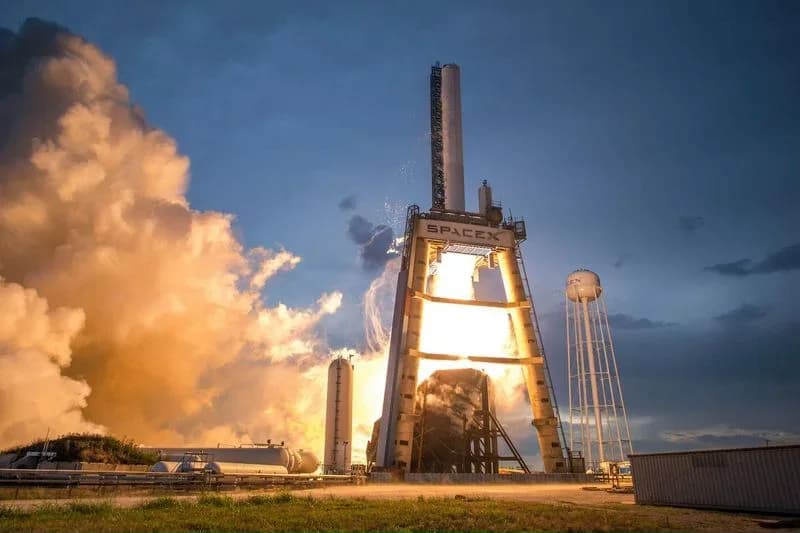
SpaceX (SPCX) is walking its IPO valuation target down to $1.8 trillion as the roadshow approaches, replacing earlier expectations of a $2 trillion-plus debut with a more measured anchor. The repricing reflects growing investor selectivity toward large private listings and gives underwriters room to price into real demand rather than defend a stretched headline.
The valuation reset tells a story about demand
The earlier $2 trillion-plus figure circulated widely before books opened with cornerstone investors. That number now sits in the rearview. At $1.8 trillion, bankers can market the deal around SpaceX's cash-generative Starlink subscription base and the steady cadence of its Falcon launch program instead of asking investors to underwrite a moonshot multiple.
The shift matters because it signals where institutional appetite actually sits. After a stretch of choppy debuts in adjacent sectors, the pool of buyers willing to anchor a mega-cap private listing at aggressive valuations has thinned. A conservative starting point lets the order book build organically rather than forcing a narrative that demand does not support.
Starlink and Falcon cadence anchor the pitch
Marketing materials center on two operational pillars: Starlink's recurring subscription revenue and the reliability of SpaceX's Falcon launch schedule. Both give investors something concrete to model rather than relying on future-state projections alone.
Starlink's subscriber scale is the cleanest comparable investors will benchmark against telecom and connectivity names. The satellite-broadband business produces predictable cash flow, and the deal mechanics will likely establish a fresh discount rate for that revenue stream across the sector.
Falcon's launch cadence adds a second layer of operational credibility. Consistent flight volume demonstrates manufacturing and logistics discipline that few competitors can match. Together, these two pillars give the listing a foundation built on execution rather than speculation.
SpaceX roadshow pricing and underwriters remain in focus
SpaceX roadshow pricing and underwriters will remain central to the IPO discussion as book-building develops. Bloomberg reported that the company was targeting a valuation of at least $1.8 trillion after consultations with advisers and investors, although Musk disputed that account on May 29, 2026. Until formal pricing terms are confirmed, the key question is whether institutional demand is strong enough for the underwriting group to support the final valuation while leaving room for an orderly market debut.
Cornerstone allocations, early pricing guidance and the depth of the order book are the next concrete data points to watch. A strong book would support the case for firm pricing. A weaker response could increase pressure for more conservative terms.
The details below the headline valuation will matter as well. Investors will be watching the metrics that shape forward cash flow assumptions, including Starlink economics, launch activity and the capital required to fund the company's broader strategy.
Listed peers carry read-through risk
No company sits closer to the SpaceX read-through than Tesla. Elon Musk's overlapping shareholder base creates a unique dynamic where any large capital raise linked to him raises questions about competing demand. A tighter pricing discipline on the SpaceX side could relieve some of that pressure on TSLA holders as the roadshow unfolds.
Among defense contractors, Lockheed Martin (LMT) has the most direct operational overlap through its national security launch programs and satellite production pipeline. That business profile gives LMT a structural link to the deal that goes beyond surface-level sector correlation.
Boeing (BA) occupies a similar space on paper as a legacy crewed and commercial launch operator, but its recent share of flight activity has been modest. As SpaceX moves toward a public listing with hard numbers on cadence and margins, the gap between legacy operators and the new benchmark becomes more visible.
What the roadshow will reveal
Cornerstone allocations and early pricing guidance are the next concrete data points. Whether $1.8 trillion holds as a floor or gets negotiated lower depends on how deep the order book runs at that level.
The more important signals sit below the headline. Starlink's average revenue per user and Falcon's flight frequency will determine how analysts build forward cash flow models. If those unit economics come in strong, the case for a higher final price range strengthens even from a conservative opening.
How listed aerospace and defense names trade during the marketing window will also matter. If those stocks hold steady or move higher alongside the SpaceX roadshow, it points to genuine sector-wide appetite. A pullback would suggest demand is rotating into SpaceX at the expense of existing holdings.
The anchor reset is the safer play
Setting a conservative valuation target before the roadshow gives SpaceX and its underwriters flexibility. If demand materializes at or above the anchor, the narrative shifts to oversubscription. If it does not, the lower starting point limits the downside optics. In a market that has grown more selective about mega-cap private listings, that discipline may prove to be the difference between a clean debut and a headline that reads as disappointment.
Worth the read?