Investing in Copper — A Practitioner's Guide
Investing in copper is a bet on industrial growth, not a safe haven. A practitioner's guide to the vehicles, the real risks, and sizing the position.
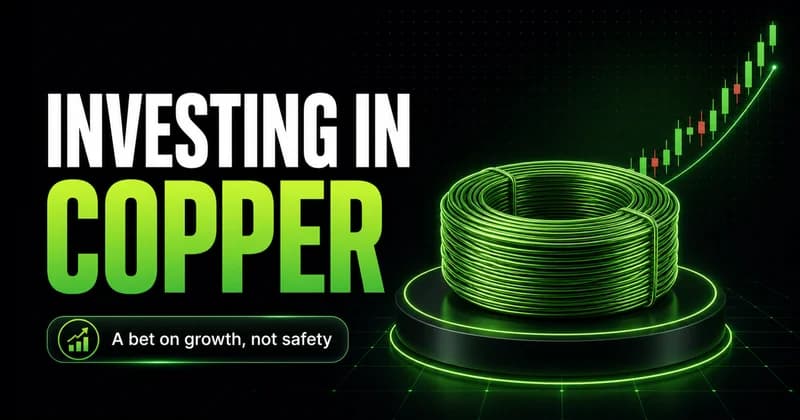
Investing in copper means taking a position on the price of the metal, either directly through bullion and futures or indirectly through miners and funds. It is a bet on industrial demand, not a store of value. That single distinction decides how the position behaves, where the risk lives, and how much of it you should actually hold.
Most guides treat copper as a checklist of vehicles to buy. The harder part is sizing the exposure and knowing the condition under which the whole thesis stops working. Copper trades on growth expectations, and growth expectations turn fast.
What investing in copper actually means
Copper is an industrial metal. Roughly two-thirds of it ends up in wiring, construction, motors, and grid infrastructure. When the global economy expands, copper demand rises with it. When manufacturing contracts, copper feels it early. This is why traders call it a read on real activity rather than a hedge against it.
That is also the core of the copper investing thesis right now. Electrification, grid buildout, and data-center power draw all consume copper, while supply is constrained by long mine-development timelines. The structural case is real. It is also already priced to a meaningful degree, which is a different thing entirely.
The main types of copper investments
There are several ways to gain exposure, and they are not interchangeable. Each carries a different risk profile and a different reason it can underperform the metal itself.
Vehicle | What you own | Main risk |
|---|---|---|
Physical bullion | Bars or coins | Wide buy-sell spread, storage, poor liquidity |
Copper miner stocks | Equity in a producer | Operational and geopolitical risk on top of price |
Copper ETFs | A fund tracking miners or futures | Tracking error, expense drag, roll cost on futures funds |
Copper futures | A margined contract | Margin, contango, fast invalidation |
A point most beginners miss: miners and ETFs do not move one-for-one with the metal. A miner adds company-specific risk, including cost overruns, jurisdiction risk, and management decisions. That can amplify your upside when copper rises and production grows. It can also drag the position lower while the metal goes nowhere.
The benefits of investing in copper
The case for copper is structural, not promotional. A few points carry real weight:
Exposure to electrification and grid demand that is measured in decades, not quarters.
Diversification away from purely financial assets, since copper tracks physical economic activity.
A constrained supply side, where new mines take years to come online, which supports price over long horizons.
These benefits are genuine. They are also slow. Copper rewards an investor with a long horizon and the patience to sit through cyclical drawdowns. It punishes the trader who buys the narrative at a price extreme and expects the structural story to bail out a poor entry.
The risks of investing in copper
Copper is volatile. It can move several percent in a session on a single macro print out of China or a shift in rate expectations. The risks stack:
Price volatility tied to global growth and the manufacturing cycle.
Concentration in a handful of producing countries, which adds geopolitical and supply-shock risk.
Vehicle-specific risk: a miner can fall while copper holds, and a futures ETF can bleed value through negative roll yield even when spot is flat.
Copper does not care about your conviction in electrification. It prices the next quarter of demand, and it reprices it without warning.
This is where position sizing matters more than vehicle selection. Most investors are overexposed to a cyclical metal without realizing it, because they size the position around the bullish story instead of the drawdown they would have to survive. If a 20% pullback in copper would force you to sell, the position was too large before the pullback ever arrived.
Investing in copper versus investing in gold
Copper and gold are both metals, and that is roughly where the similarity ends. Gold is a monetary asset. It tends to hold or gain value when growth slows, real rates fall, or confidence in currencies weakens. Copper is the opposite trade. It strengthens when growth accelerates and weakens when it stalls.
This is the part of the thesis that inverts. The copper-as-growth position works while the market is pricing expansion. The moment it shifts to pricing a slowdown, the same structural demand story does nothing, and copper can fall hard while gold holds. Owning both is not redundant; they perform in different regimes. Treating copper as a gold substitute is the most common framing error beginners make.
How does investing in copper work in a portfolio?
Copper is a satellite position, not a core holding. It belongs in the cyclical, growth-sensitive sleeve of a portfolio, sized so a sharp drawdown is survivable without forcing a decision. A practical approach is to decide the maximum loss you accept on the position first, then size backward from there, rather than choosing a dollar amount and discovering the risk later.
For most long-term investors, a broad copper or miners ETF is the cleaner expression than a single producer. It removes the company-specific failure modes while keeping the exposure to the metal. Futures belong to traders who manage them actively with defined invalidation, not to investors building a position to hold.
A simple checklist for investing in copper
Before taking a position, work through a short, honest checklist:
Define why you are buying: long-term electrification thesis, or a shorter cyclical trade. The horizon decides the vehicle.
Choose the vehicle that matches the horizon: ETF or miners for long holds, futures only for active management.
Size the position around the drawdown you can survive, not the upside you hope for.
Define what would make you wrong: a level, a macro condition, or a thesis break, set before you enter.
Decide in advance how copper fits beside the rest of your holdings, so you are not doubling cyclical risk by accident.
The goal is not to predict copper. It is to hold an exposure you understand at a size that lets you stay in the position long enough for the thesis to play out.
FAQs
What is investing in copper in simple terms? It is taking a position on the price of copper, either by owning the metal directly or by owning miners and funds tied to it. Because copper is an industrial metal, the position is essentially a bet on global growth and industrial demand.
How does investing in copper work for beginners? Most beginners start with a copper ETF or a basket of miner stocks rather than physical bullion or futures. The fund or shares rise and fall with copper demand and the broader growth cycle, giving exposure without the storage costs of metal or the margin demands of futures.
What are the main risks of investing in copper? Price volatility tied to the global growth cycle, geographic concentration of supply, and vehicle-specific risks such as miner underperformance or roll cost in futures-based funds. Position size is the largest controllable risk.
Is investing in copper better than investing in gold? Neither is better; they do different jobs. Copper strengthens when growth accelerates, while gold tends to hold up when growth slows. They are complementary regime trades, not substitutes.
What is an example of investing in copper? Buying shares of a copper-focused ETF that holds mining companies is a common example. The investor gains diversified exposure to copper demand without owning the physical metal or managing a futures contract.
How much of a portfolio should be in copper? There is no fixed figure, but copper belongs in the satellite, growth-sensitive part of a portfolio, sized so a sharp pullback is survivable. The size should be set by the drawdown you can tolerate, not the upside you expect.
What are common mistakes beginners make when investing in copper? Treating copper as a safe-haven like gold, sizing the position around the bullish narrative instead of the drawdown, and buying a single miner while assuming it tracks the metal one-for-one.
Where to take this next
Copper is a clean way to express a view on real economic activity, provided you treat it as a cyclical, growth-sensitive exposure rather than a store of value. The vehicle matters less than the sizing and the invalidation. From here, it is worth studying how the commodity cycle moves with interest rates, how miners differ from the metal in practice, and how copper sits alongside gold in a portfolio. The investor who understands the regime copper trades in manages the position far better than the one who only memorized the ways to buy it.
Worth the read?